The Bachelor of Anthropology, through the ability on responding over development environmental problems, has the vision to become a recognised Anthropology undergraduate study programme nationally and globally with the commitment to excellence in the mastery, development, and application of anthropological science by 2026. This vision have its accompanying mission which consist of:
Carrying out anthropology education quality and following developments with the times to produce graduates who have competence in the field of anthropology, are able to be competitive morally and academically, have social sensitivity, and are benefical to society;
developing research and community service that focuses on anthropological issues in the local, national, and international scope;
carrying out management of anthropology education by applying professional quality assurance principles based on transparency and accountability;
increasing the role of anthropology in the wider environment, through continuous collaboration by applying the principles of equality, partnership, and mutual trust with various institutions, including academic institutions, government, industries, and the wider community.
The PEO here aims to produce draduates that are able to recognise, familiar, understand over wide range diversity of human, and giving them a definitive advantage with the ability to work across diverse cultural contexts. Have the skills in conducting culturally-informed research and communicate effectively across various formats.
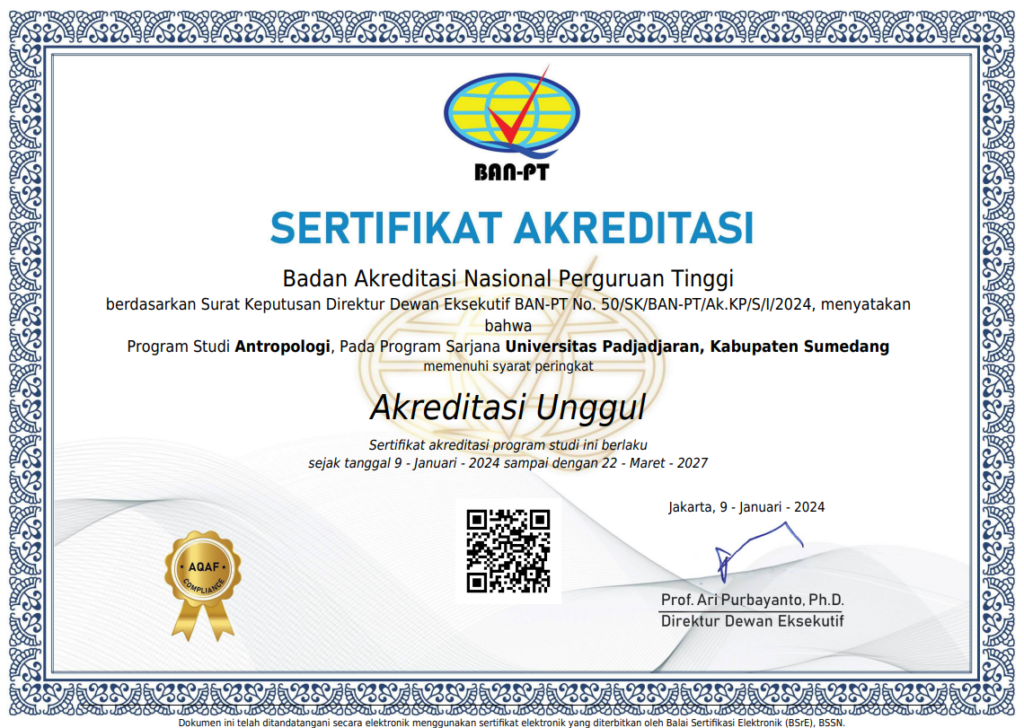
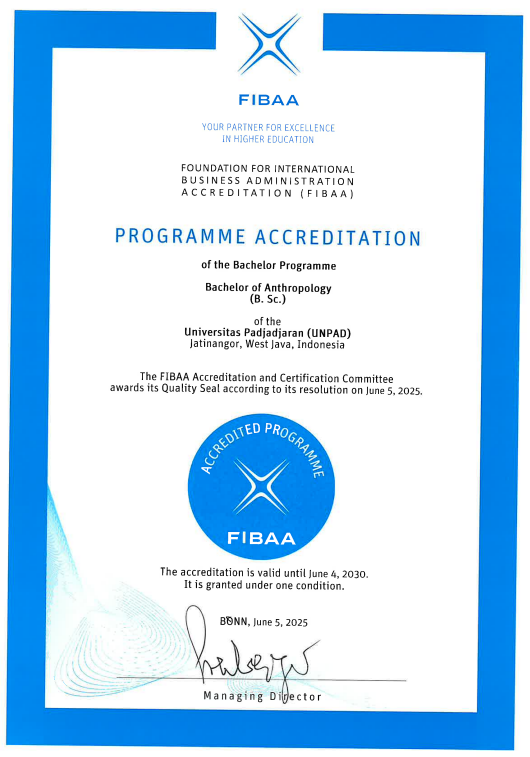
The Anthropology study programme has earned exellent acreditation based on BAN-PT. And is currently ranked sixth in Indonesia based on the ranking that carried out by Edurank, 90th in Asia, and 727th globally. The level of rigour of National Selection Based on Test (SNBT) in 2022, as measured by the ratio between capacity and number of applicants, shows a figure of 1:24 (source: Quipper).
– Researcher – Policy Researchers – Government Officers – Lecturer – Community Development Consultant – Ethnographers – Development Planners and Implementers – Intangible Cultural Heritage Experts – Socio-cultural Researcher – Curator